Sunday, November 25, 2012

The Gifts That Keep On Giving

Recently, I have been spending most of my time planning to move, moving out, moving in, buying new appliances, organizing my bills with my new address and all of those little things that add up to be a lot of things...but it's all worth it because...

I have a sewing room that is 10 feet by 12 feet! 

So, as I entered this new sewing room...I just wanted to learn how to make a few new things. Learning takes my mind off of everything. It's a stress relief. Luckily, there are several awesome tutorials by some talented bloggers. Little do they know, (or maybe they do) that they give a gift that keeps on giving.

As you may know, my Mothers mean the world to me. My Mother is my right hand lady, my Grandma Marge and Grandma Chin are my other two Mothers. I wanted to send them something just because I know they will appreciate it, enjoy it and be proud of me. I think that is the reason I love to sew. Just for those three ladies. 

Jeni at In Color Order has a Lined Drawstring Bag Tutorial that rocks! I peruse her blog from time to time and I love all of her work. So, naturally I went there and found inspiration to make my Mothers these bags!


Grandma Marge
 Grandma Chin
 Mama
 Annie
I was searching for a creative way to send these items, so I found this tutorial from A Beautiful Mess by Elsie and Emma. I love their site! So much inspiration!
Here are the items I wanted to send...
I took a paper bag, folded it up with sharp creases, and sewed the sides with a couple different decorative stitches.


I love tutorials and the beautiful people that put them out there for learners like me. Someone shares their talent with the world by writing a post, I read their blog, get inspired, make a gift, send it to my family, they smile, share with their friends and pass on the love. Tutorials are the gifts that keep on giving!


Tuesday, November 20, 2012

Home Is Where the Heart Is

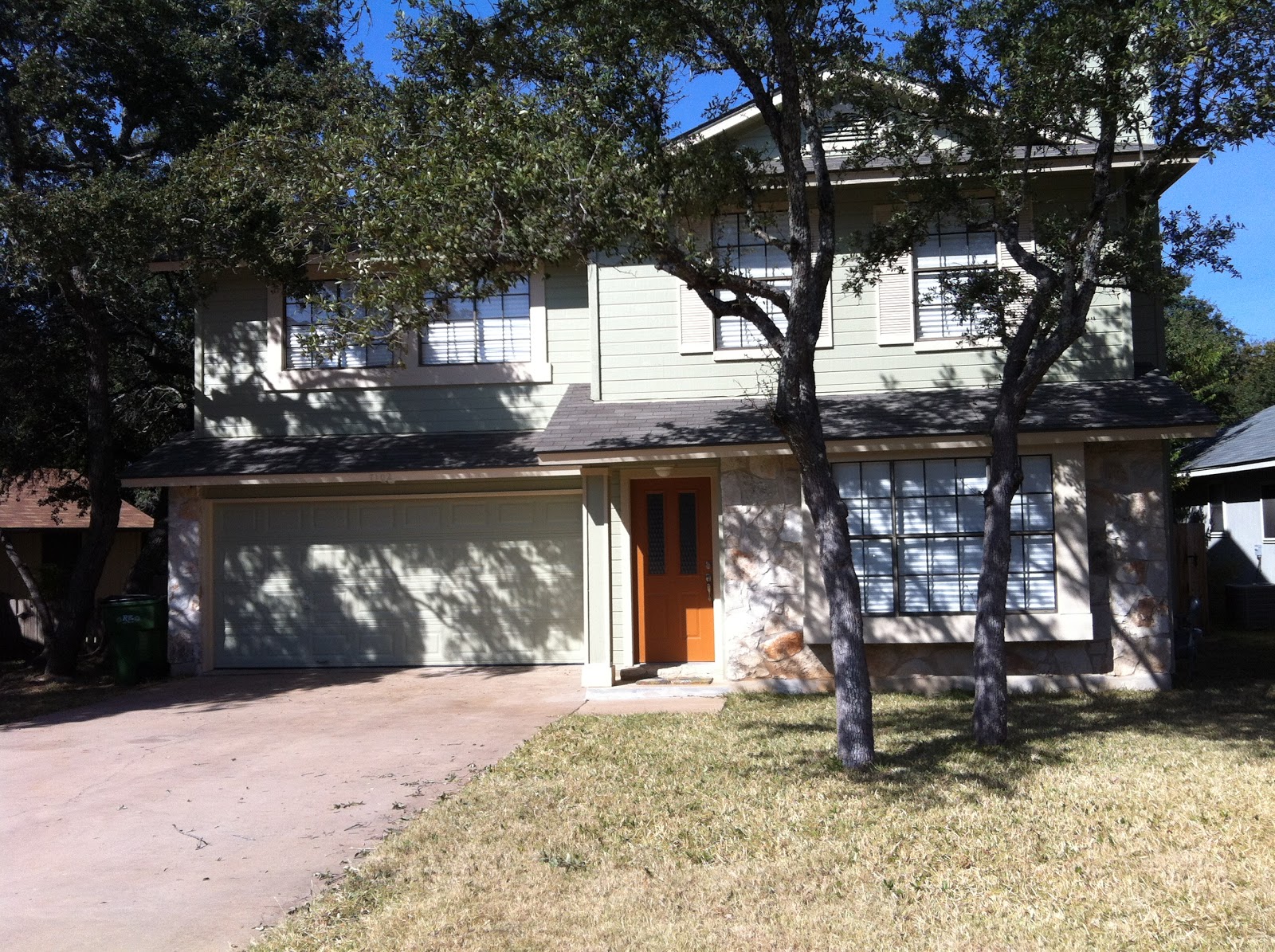
Recently, I bought a house! So, as you may gather, it has been hard to sew this past month. Somewhere between closing on a house, working on making math come alive and moving into the new house, sewing has been put on the back burner. Well, the back burner of my mind! I'm mentally sewing all sort of goodies for this house! However, since I haven't been able to physically sew, I thought I would share some pictures....
Front View
Cat Ledge! Annie has a perfect spot to look out! I'm thinking it's a cozy place to put a long quilted pillow so she can lounge and watch birds. Actually, a bird feeder would be a nice addition to that window!
Not quite sure what to do with all of these windows! I love the open living area. I can't wait to sew up some pillows for the couch, place mats for the table, art for the wall...
The house has new carpet, so the stairs have film to protect while we are moving in. Annie's going to love running up and down these stairs as soon as she gets used to the house. 
Here is a photo of her right before she took her first step down! I took some priceless video of this moment! 
Master Bedroom!
Kitchen! I'm making Thanksgiving dinner on Thursday!
Looking out at those oak trees...
Math photo! Can you figure out the area of the kitchen floor?
Front bedroom AKA sewing room! There is a ton of natural light in the room. This sewing room has inspired me to think about all of possibilities for organizing. I can't wait to get my room set up...high on the priority list.
Here's a before photo....Stay tuned for the after...
I feel so blessed and thankful this week for a new place to call home! Happy Thanksgiving!


Sunday, October 28, 2012

Multiplication Mug Rugs

I'm scrap, scrap, scrappin' it up over here this week!

If you remember, the last two math quilts I made were about multiplication concepts. Needless to say, I had lots of little square inches left over.

Since basic multiplication facts are always at the focus of attention in elementary school, I decided to use those scraps and make some multiplication mug rugs! A 'mug rug' is a bigger than a coaster and smaller than a place mat, so it makes the perfect size 'rug' to have at your desk or table. I use them all of the time for my drink and a snack. Everyone needs one or three.

These mug rugs are extra special because they also show how the distributive property works with basic facts. There are certain facts that are harder than others. When you talk to a student, they might say, "oh yeah, the fives are easy, so are the tens, twos are doubles." It is facts like 8 x 6, 8 x 7, 7 x 6, 7 x 7, 8 x 8, 8 x 9 etc. that are the hardest ones. WHY? Well, because generally we combine other facts and patterns to help solve these. Yes, my friends, there is so much to learn beyond memorizing them. If your teacher only told you to memorize them and not conceptually understand them...I am so sorry! Don't worry, you can still learn them in a different way! Here's an example:

Fact: 6 x 9 = 54
The front of the mug rug is an area model showing 6 rows of 9 inches in each row.
If you didn't know 6 x 9, you could break up the area model and use a fact you do know to help.
Do you know your 5s? Look at the colors on this mug rug.
Green: 6 rows of 5 (6 x 5 = 30) Orange: 6 rows of 4 (6 x 4 = 24) So, 30 + 24 = 54.


(The bottom photo is the backside...another enjoyable place to put your mug!)


Fact: 6 x 9 = 54

Can you figure out how I broke this fact up differently? I split up the rows instead of the columns this time. Try to write the number sentences!


Okay, check yourself:
(4 x 9) + (2 x 9)
   36 + 18 = 54
Fact: 6 x 9 = 54

Similar to the first rug mug, yet different. Why is that?


Also, this one has a really scrappy backside! I tried to use every leftover piece!

Fact: 6 x 10 = 60

I started running out of square inches, so I partitioned this one into 4 different parts. Can you figure them out?


This mug rug is for Annie Kitty's food and water bowl. She needed a little extra room so I added a column. How many square inches did the rug increase?


Fact: 6 x 9 = 54

Yet another way to partition this fact! How many more ways can you do this same fact?

If you know a student who has trouble memorizing their facts...Get some grid paper and have them draw an area model for the one they are having trouble on! Tell them to split it in as many ways as they can do it.

One thing I know for sure, they will be doing more math this way than they would have done with flashcard drills.


All in all, my main point is that there are lots of different ways to use smaller facts to help you solve larger problems. Find what works for you! Over time, you will begin to automatize your facts and become fluent. The best part of truly understanding facts in this way is that pretty soon you will begin to multiply 2 x 2 digit numbers mentally!


Saturday, October 13, 2012

Square Bottom Bag

I sure love a good bag. Without actually trying to be a bag lady, sometimes I settle into the role quite comfortably. Does anyone else feel my pain? ; )
This last weekend I attended the National Council of Teachers of Mathematics (NCTM) conference in Dallas. Although the conference wasn't even three full days, I packed all of my belongings in 4 different bags: One suitcase, one computer case, one ATPE bag and my new square bottom bag!
I truly tested this bag out the past two weeks and guess what? It passed the durability test! One night I even stuffed it full with 10 books, a purse, shoes and my iPad. The best part of this bag is the sturdiness of the handles...I love quilting parallel lines!
My label completes the look. These bags are also helping me practice my free motion quilting, too!
Here is a red square bottom bag that will soon belong to my awesome math friend, Dana. I'm confident she's going to love it! Do you need one for your bag collection? Let me know your favorite color and I'll stitch one up for you!


Tuesday, October 9, 2012

Sweet as Honey


Life is busy. That’s a fact. Here’s another fact: No matter how busy life gets, we must make time for our loved ones!

My sweet friend, Nina, is entering into a new chapter in her life. Motherhood! She is expecting a baby girl, Kayla Rae, to arrive in December. When I visited with Nina this summer, I just knew that I had to come home for her baby shower. I figured even if it is only a few hours on a Sunday afternoon, they are precious moments.

After my plane ticket was purchased, I just needed to figure out what to make little Kayla! I had several ideas percolating through my mind, but I kept coming back to this Love My Honey fabric collection by Jenni Calo. To me it symbolized many things...

1. Sweetness: Honey is sweet just like Nina, her loving family and her soon-to-be-born baby.
2. Bees: We are all like busy bees, trying to keep up with our own lives while still keeping in touch with those we love.
3. Mint and Honey: The color palette of this fabric just reminded me of Nina.

Once I washed and ironed all of the fabric, I remembered that beehives are made up of several little hexagons. In fact, some of the material even had hexagons on it. So, I had a new challenge! All of my past quilts were squares and/or rectangles. As I made the template for the pattern with my grid paper, I started to get excited. This is where that 1st and 2nd grade math standard about composing and decomposing shapes to make new shapes comes in…I decomposed the hexagon into 2 trapezoids so I could sew everything a little easier! I love a little real-life application of math!


After I made the quilt top I had some fabric left over. I made a small, soft blanket for Kayla to hold, a dress and little shoes! Everyone brought a book to the shower instead of a card, so of course, I had to pick up a Little Golden Book…Yes. It’s a math book.


I love how quilts fold up so beautifully! 

And lastly, my Grandma Marge told me this weekend to do absolutely everything you want to do while you are young and still able to do it. For me, going to my dear friend’s baby shower was one of those things. I’ll cherish the memories of passing her the gifts as she opened them, finally meeting her sweet pooch, Lulu, and visiting with family in her beautiful home after the shower. Now…I just can’t wait to meet little Kayla! J


Saturday, September 29, 2012

Fabric Pumpkins

I love the fall! It's a perfect time of year for making soups with lots of veggies! Lately I've had this obsession with squash soup. Have you ever tried it? It's pretty tasty! So, speaking of squash-like things...this year I've started up a new tradition...sewing up fabric pumpkins!
This idea was inspired by my friend, Gina's kindness. She generously gave me a box of all different types of fabrics. Of course, I needed to make her something to say thank you! Since fall is here, I thought that a little pumpkin patch would look just perfect in her house! And then I totally needed my own set!

Do you want your own set of pumpkins? Let me know and I will sew you up a trio!


Wednesday, September 12, 2012

Distributive Duo Quilt (Part 2 of 2)

After I had such a good time making the first distributive property quilt, I just knew that my work was not complete! I had to make another quilt to show a different way to look at the same problem-29 x 39. So basically, here is a new quilt illustrating a new strategy using the same problem!
This strategy is basically single number partitioning by a decade number. For example, I did not partition or break up the factor 29. The only factor partitioned was the 39 using the decade number 10, so I ended up with 10 + 10 + 10 + 9 = 39.
This strategy is easier for me to do mentally because I only have to keep track of the partitioning of one factor in my mind.  Also, when students think of this problem in context of a real-life situation, many times they will use this strategy because it doesn't always make sense to break up the amount in the group. Let's look at an example: Bettina has 39 photo albums. There are 29 pictures in each album. How many total pictures does she have? Based on the context of the problem, a child would likely partition the photo albums (groups) and keep the number in each group together.

The quilt also helps visualize how you could use compensation to solve the problem.  For example, since 29 is so close to 30, I can actually solve the problem by using (30 x 10) + (30 x 10) + (30 x 10) + (30 x 9). The tricky part in finding the exact answer comes from making sure to deal with the extra at the end because I added a row of 39 by rounding to 30. So, now I have to subtract a row of 39. Can you follow my thinking?

Back to the pictures...
Tagged!
The Distributive Duo! 29 x 39 = 1,131 (in square inches)
Two different quilt backs. The left one has beautiful elephants and the right one has feathers!

Thanks for reading about my quilts and the mathematics involved! Can you think of another way to look at this same problem? My friend Diana did! I think I might have to make a 3rd quilt. 
Could this be the beginning of the distributive trio?


Monday, September 3, 2012

Distributive Duo Quilt (Part 1 of 2)

Heads Up: This is a math concept quilt so be prepared to read about math! I will be creating a series of math projects. If you are interested in reading about these, you will find them linked on this page.

I knew I needed a lap quilt for the office, but I went back and forth about the type of pattern I was going to create. Should I do another log cabin, something three-dimensional looking, just improvise something?....I really couldn't decide. Then it hit me like a ton of bricks! I proudly present to you the Distributive Duo Quilt (Part 1 of 2)!
A little background story...
Have you ever felt like you KNOW you learned something in school several times but you never UNDERSTOOD what you learned until one day you suddenly UNDERSTAND what you thought you KNEW? Yep. Something like that.

That question sort of describes my journey with elementary mathematics and is a big part of who I am today. I used to have math anxiety and now my full time job has privileged me the opportunity to relearn elementary mathematics. It's one of the most interesting jobs I've had to date. Approximately one-third of my work day is spent studying patterns, making conjectures and learning the best way for children to have this same opportunity.

For the 'Distributive Duo Quilts', I wanted a lap quilt for the office paired with the area model using square inches to show the distributive property of multiplication or commonly called, the distributive property of multiplication over addition. This quilt is basically the multiplication problem, 29 x 39--in square inches. If you are a 3rd, 4th or 5th grade teacher this might look familiar because it is an important mathematical model! : )
A big understanding in elementary math is that numbers can be composed and decomposed. So, I purposefully sewed the rows of squares into groups of 5-an important benchmark number.
Here are all of the pieces before they came together.
'Mac the Ripper' was in the mix as I sewed the rows and columns of squares together.
I love how the back looked with all of the sewing. I wore it around like a cape for a few days. : )
Then, I draped it in the window for birthday week! The way the light illuminated the sewing patterns in the quilt was gorgeous. I didn't really want to quilt it at first! 
Quilt Sandwich!
Annie and the halfway done yellow binding! She is the real owner of all my quilts.
Skyping with Grandma!
It feels so satisfying to put a label on my projects! The backing fabric was full of those pretty feathers. I love feathery things!
Here is a close up so you can see the square inches. Now, I know that you could get your calculator out and figure out exactly how many square inches are in this quilt, but how could you estimate the product using the distributive property? (HINT: there are several ways to do it.)

This quilt shows a certain type of strategy called double number partitioning by decade numbers. Many people refer to this as partial products. In this case, I partitioned both factors by decade numbers, for example, 30 is partitioned into 30 and 9 and 29 is partitioned into 20 and 9. In the picture below, the factors are labeled in black. The products are labeled in white. There are basically 4 number sentences when partitioned in this manner:
20 x 30 = 600 (teal)
20 x 9 = 180 (mint)
9 x 39 = 270 (light blue)
9 x 9 = 81 (tangerine)

This strategy is the one that resembles the standard U.S. algorithm for multiplication. However, when children don't understand the meaning of the algorithm, mental computation is often difficult. One common error would be that students would only multiply 20 x 30 and 9 x 9,  forgetting the other two number sentences. Worse yet, some students never actually build an area model to help understand the meaning of multiplication.

The distributive property is really fascinating, so here is another way that you can look at this quilt. When I quilted the vertical and horizontal lines, I thought it would be useful to do the sewing in groups of 25 or every 5 rows and 5 columns. Twenty-five is a benchmark number that students enjoy using when counting. So, even if you didn't understand the multiplication in the quilt, you could have another way to count up all the squares.

Whoa! Haha! Now, this might not be the most efficient way to tackle the problem, but I did it to illustrate that there are many ways to manipulate numbers when learning and understanding concepts.

For example, let's look at this part of the quilt. If you remember, it represents 9 x 9. If you didn't know this multiplication fact (yes, I know the 9s trick, but let me ask you...why does that work?) how could you solve the problem using smaller facts that you do know? When I made this section of the quilt I noticed that 9x9, which is a square number, has two other square numbers inside of it! (5x5=25 and 4x4=16) And that got me thinking, is that true for all square numbers? It's these types of questions that elementary students should ask and answer every day in their math class! 

If you are confused about the distributive property, here is a video from KHAN Academy that might help. If you are a teacher considering what you could do with students, I would take a problem-solving approach vs. watching a KHAN Academy video where he explains it. Let the students discover and explain instead! Simply ask, "What is the area of a 29 inch by 39 inch rectangle?" Give them base-ten blocks and/or inch grid paper and have some fun! :)

Thank you for reading (part 1 of 2)--especially if you have math anxiety! : ) 

I made another quilt showing a different way to consider the distributive property. It's my favorite! Stay tuned for Part 2! : )